After 14 years... it was time.
How I convinced the company to finally bring our flagship product out of the stone ages to decrease cancellations, increase conversions, and increase user satisfaction.
Some STAT history
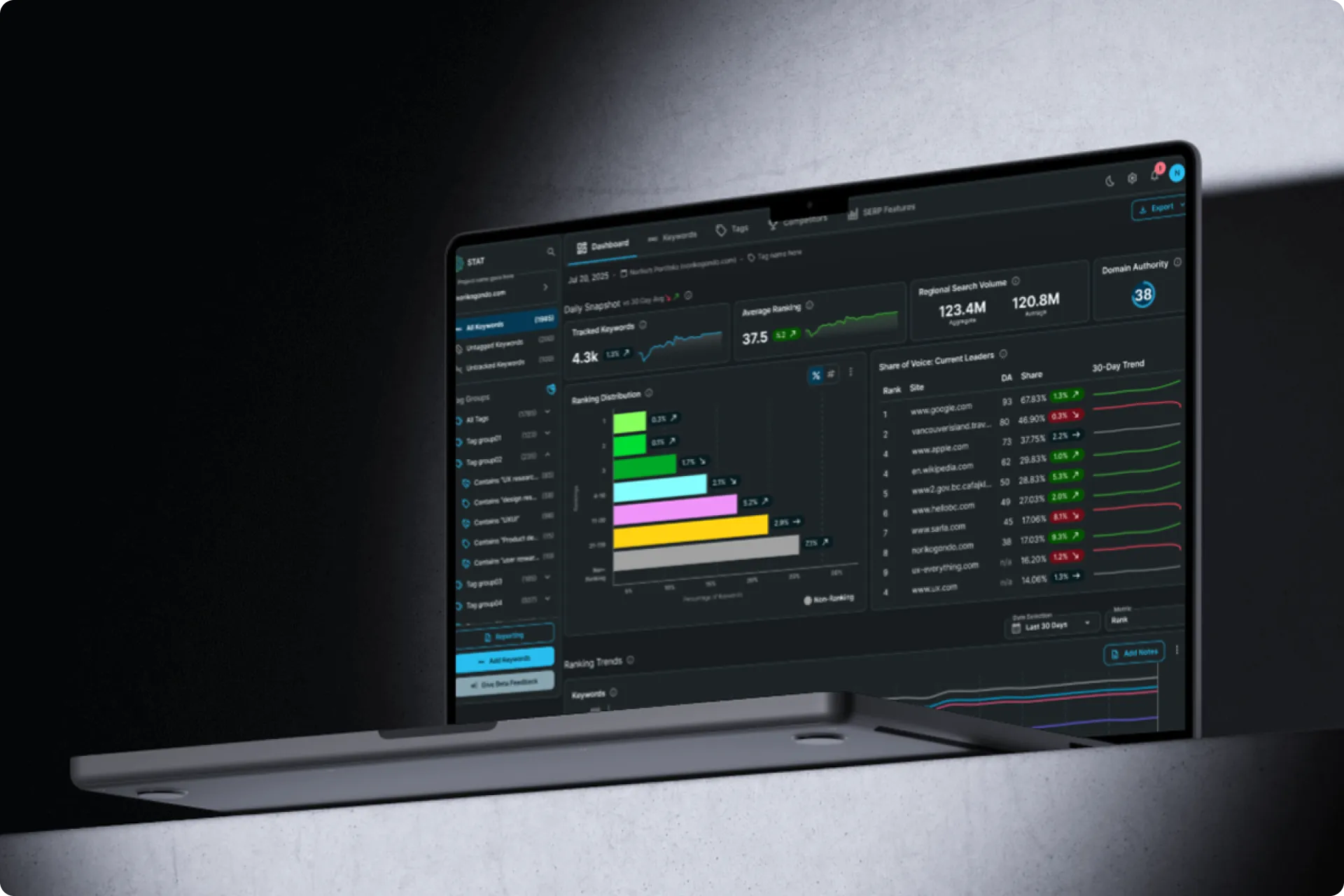
STAT is a powerful enterprise-level SEO analytics platform (B2B SaaS).
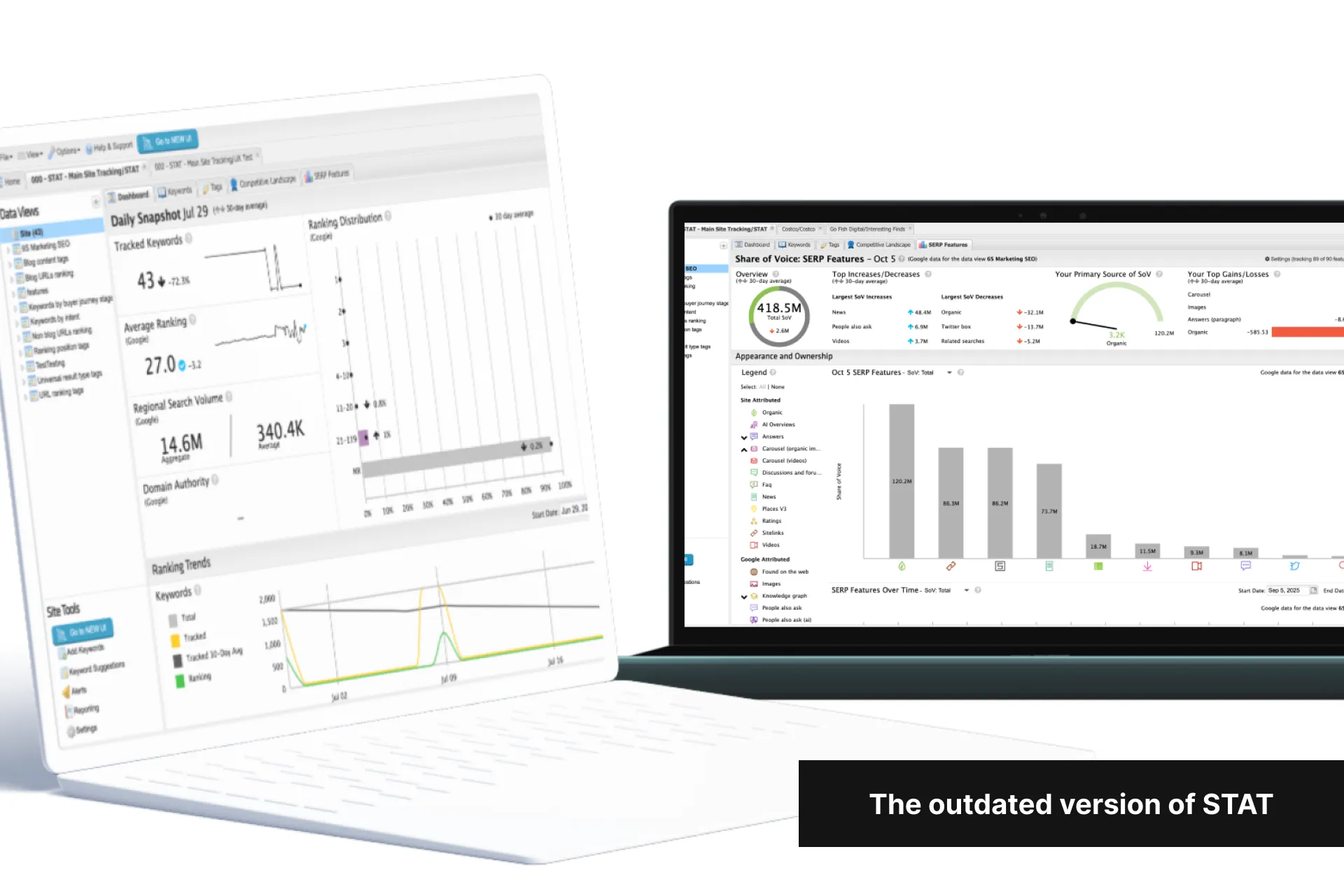
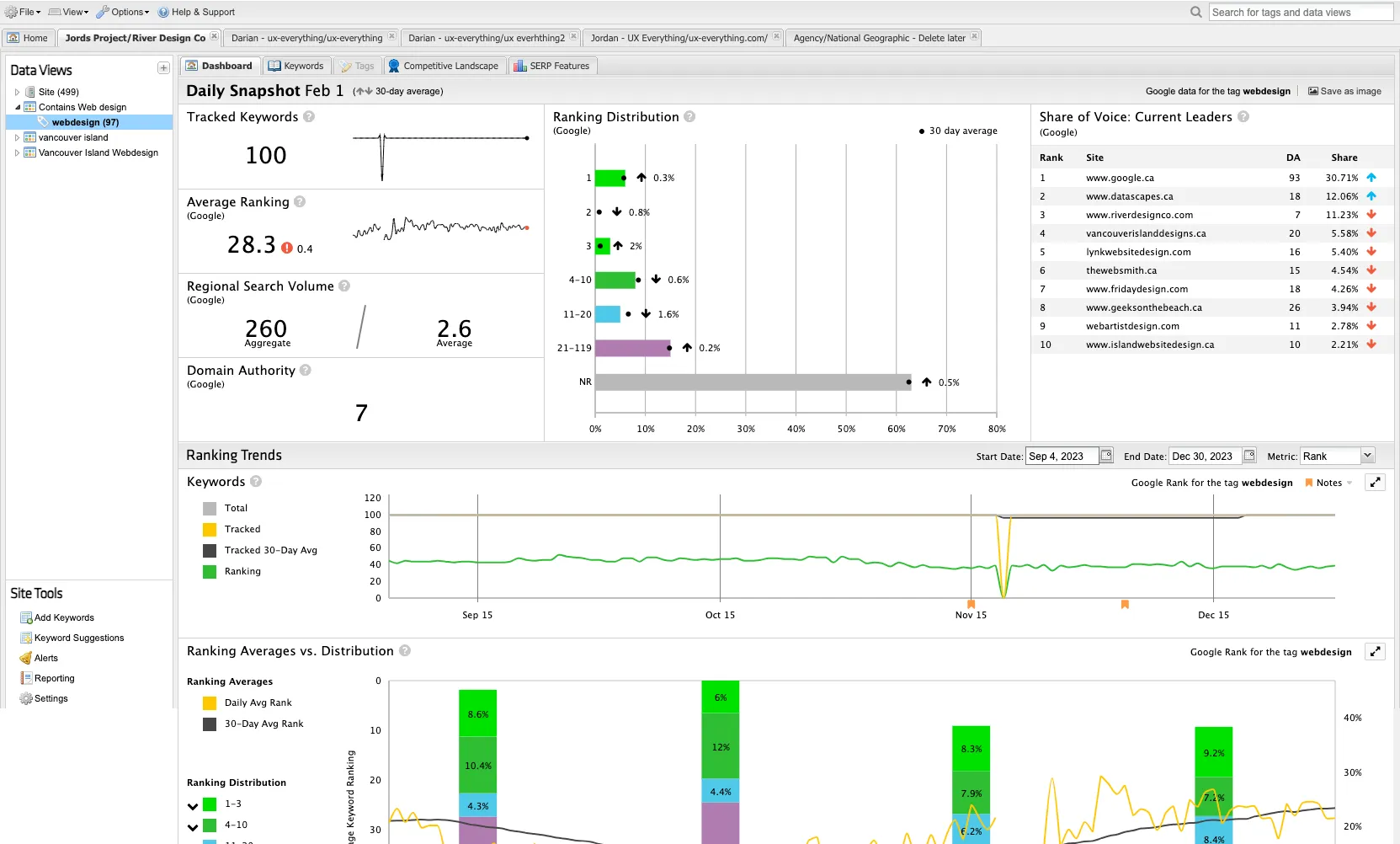
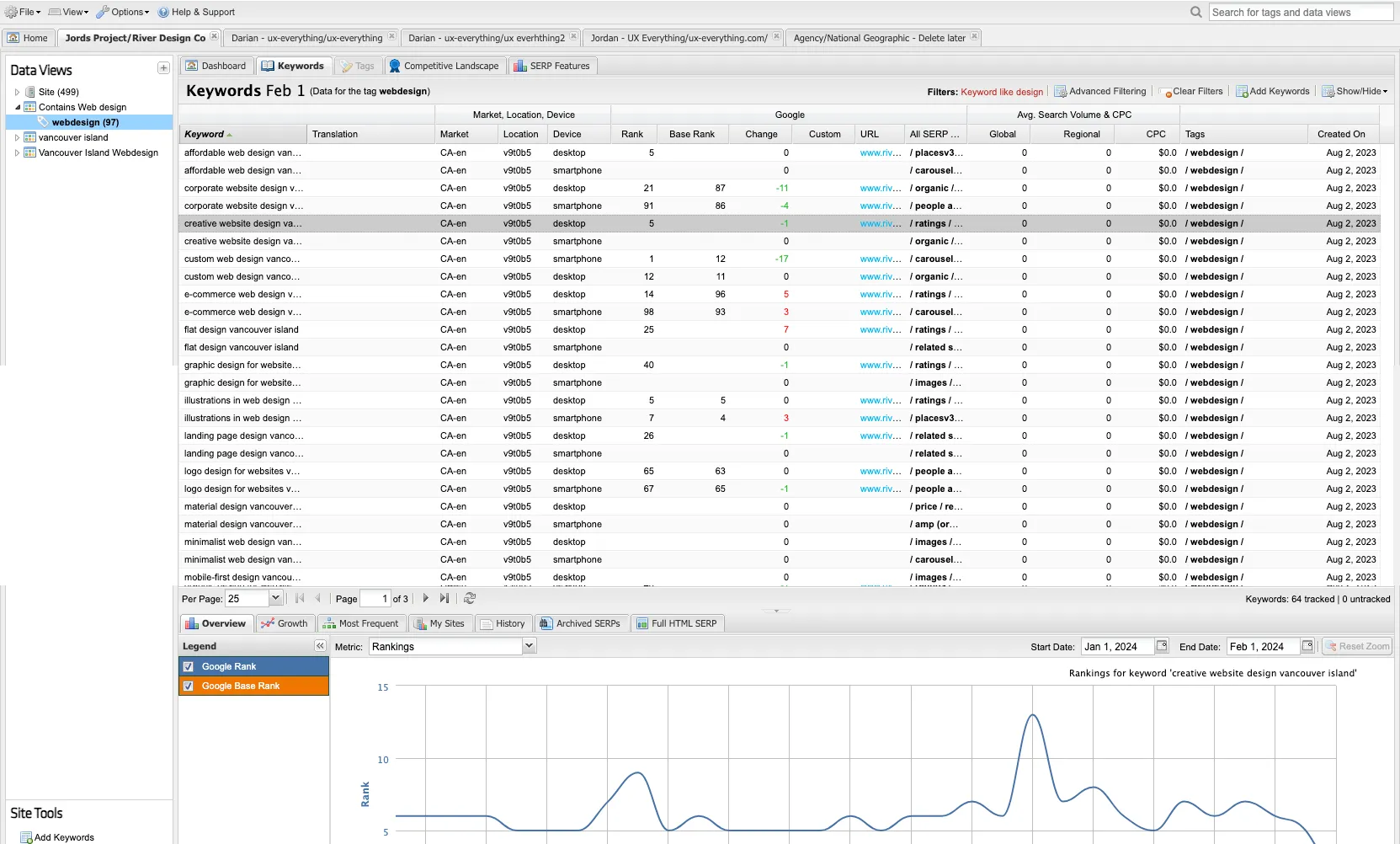
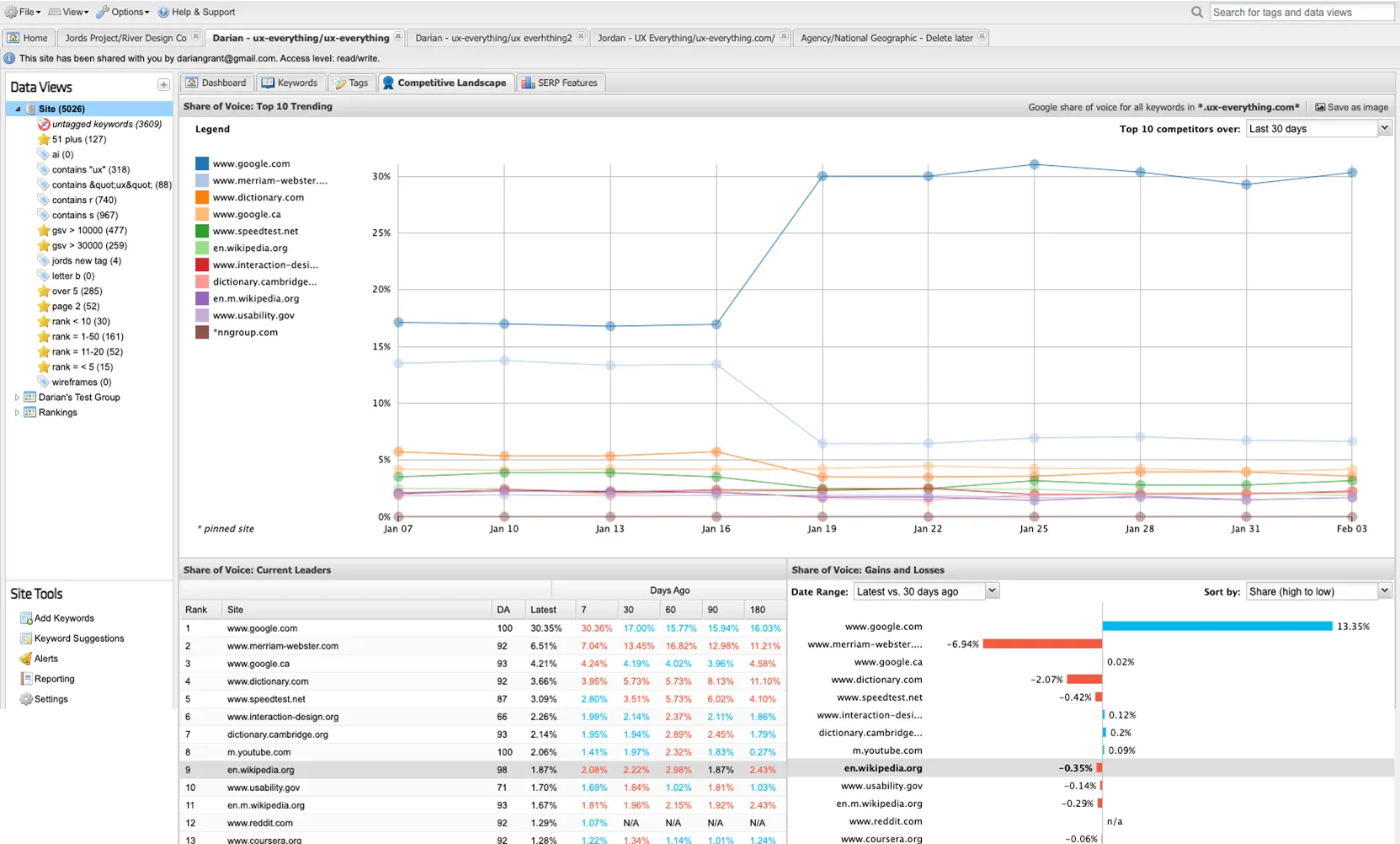
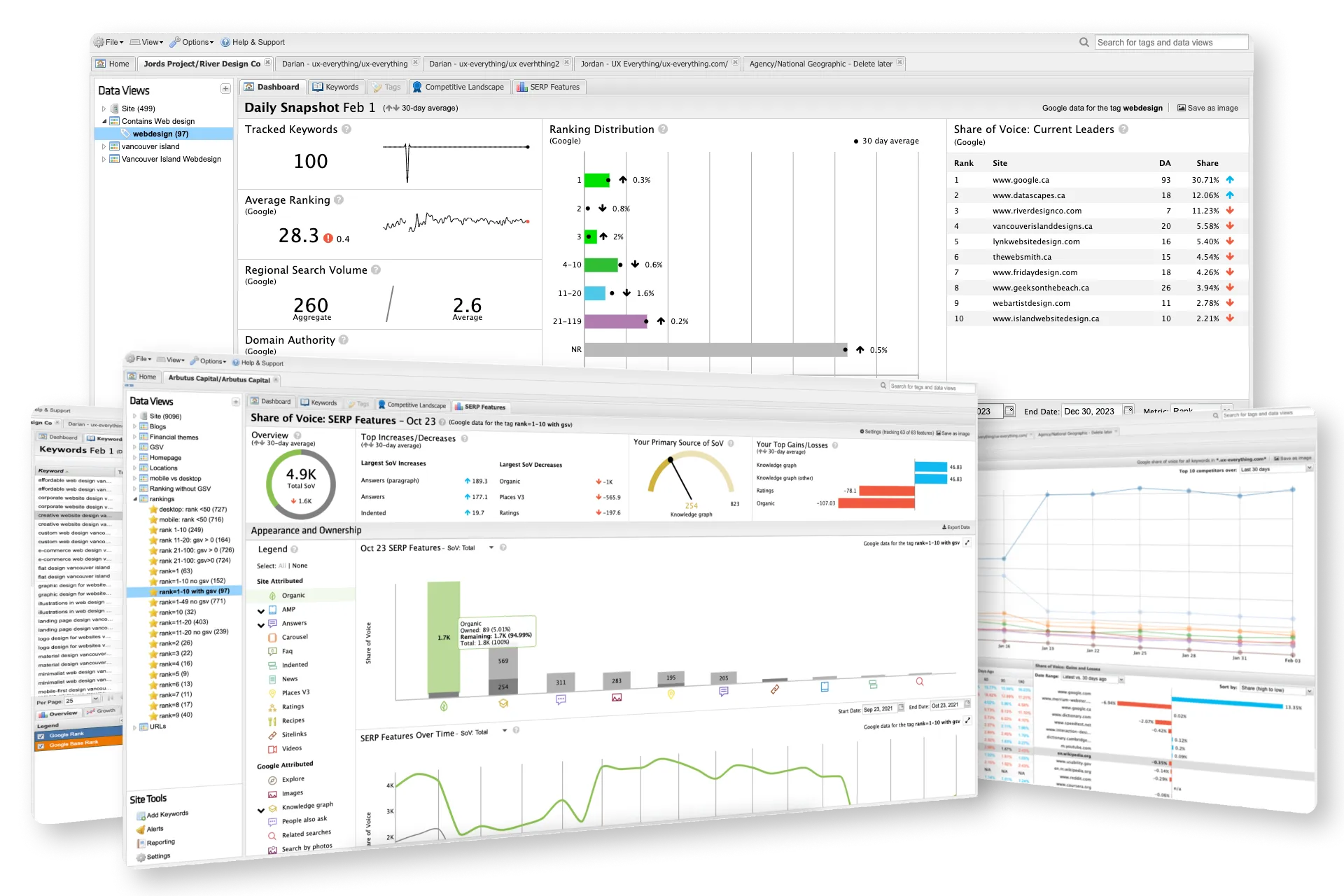
2009 - STAT was built and the style had not been updated since.
2017 - I was hired to redesign STAT but quickly proved that it was not the right course of action at that time. (See link to the case study here).
2018 - Moz acquired STAT. Shortly afterwards, Moz had diverted all of STAT’s resources to focus on other projects. No new work was being done on STAT.
2021 - Ziff Davis acquired Moz.
2023 - Cancellations within STAT were now happening at a faster rate. Conversions were slowing down. Ziff Davis was looking for the silver bullet to fix everything quickly.
Problems
Increase in cancellations: Cancellations were happening at a faster rate, and Customer Support was citing the stagnancy of our product as a large factor. The style was the same since day 1, and STAT had not released anything new in years.
Decrease in conversions: Conversions were slowing down and Sales was citing our outdated UI/UX as a reason why. Apparently younger SEOs felt more comfortable with our competitors as they offered a better UI/UX.
Time: Ziff Davis wanted everything fixed quickly as they recently acquired our company and wanted STAT to stop haemorrhaging money.
Goals
ANYTHING to reduce cancellations and increase conversions: The company needed to come up with a confident solution on how to slow down cancellations, and increase conversions.
Do it quickly: Ziff Davis wanted a silver bullet that would stop STAT and Moz from haemorrhaging money. The sooner, the better.
Constraints
No changes to the backend.
Whatever solution we landed on, we were not allowed to change anything in the backend with STAT. Backend changes were always too much effort and too risky to the existing data our users relied on.
How to measure success
Decrease in churn
Increase in demo requests
Increase in conversions
Got some current feedback
In order to propose a confident solution, I wanted to get up-to-date feedback directly from our users.
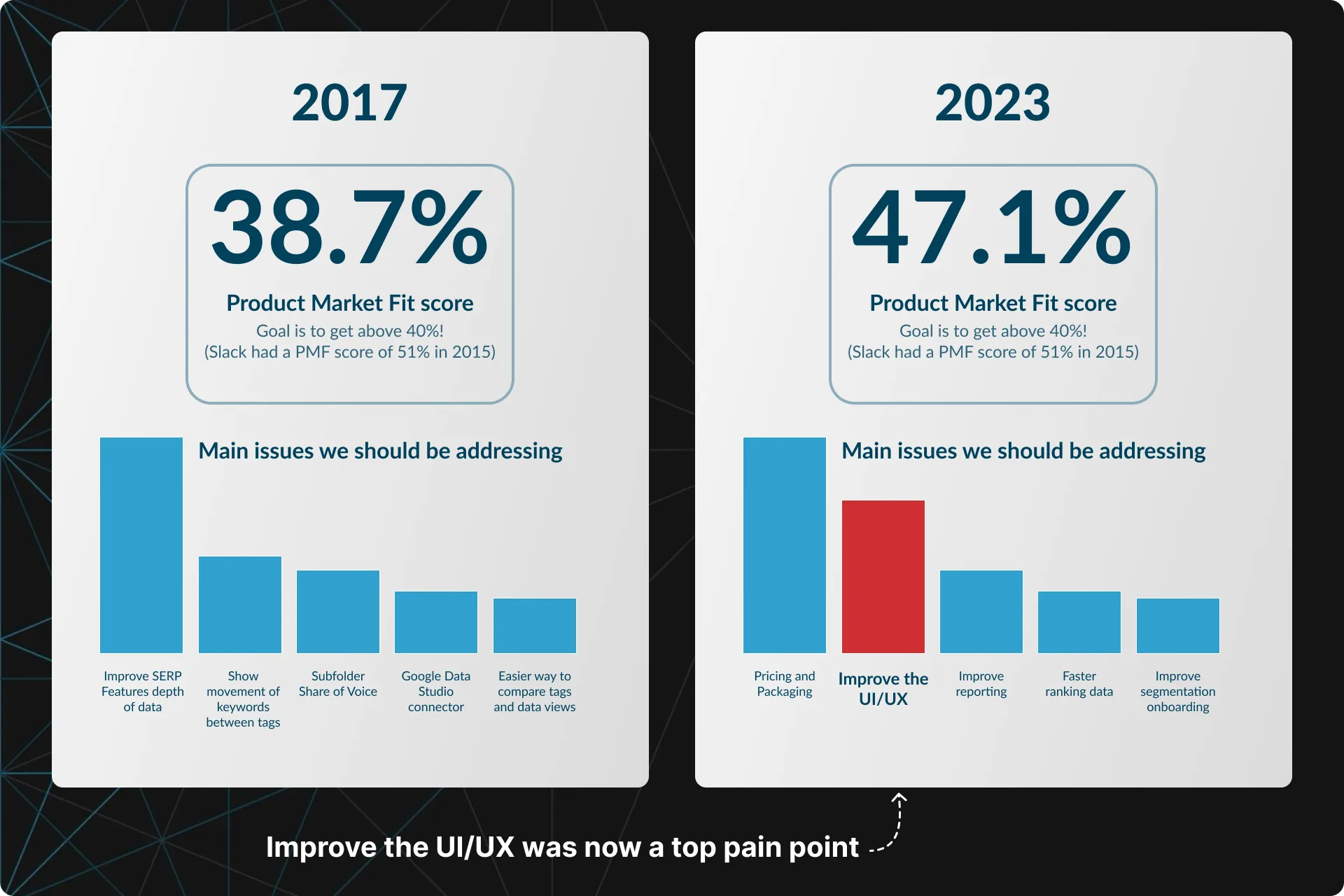
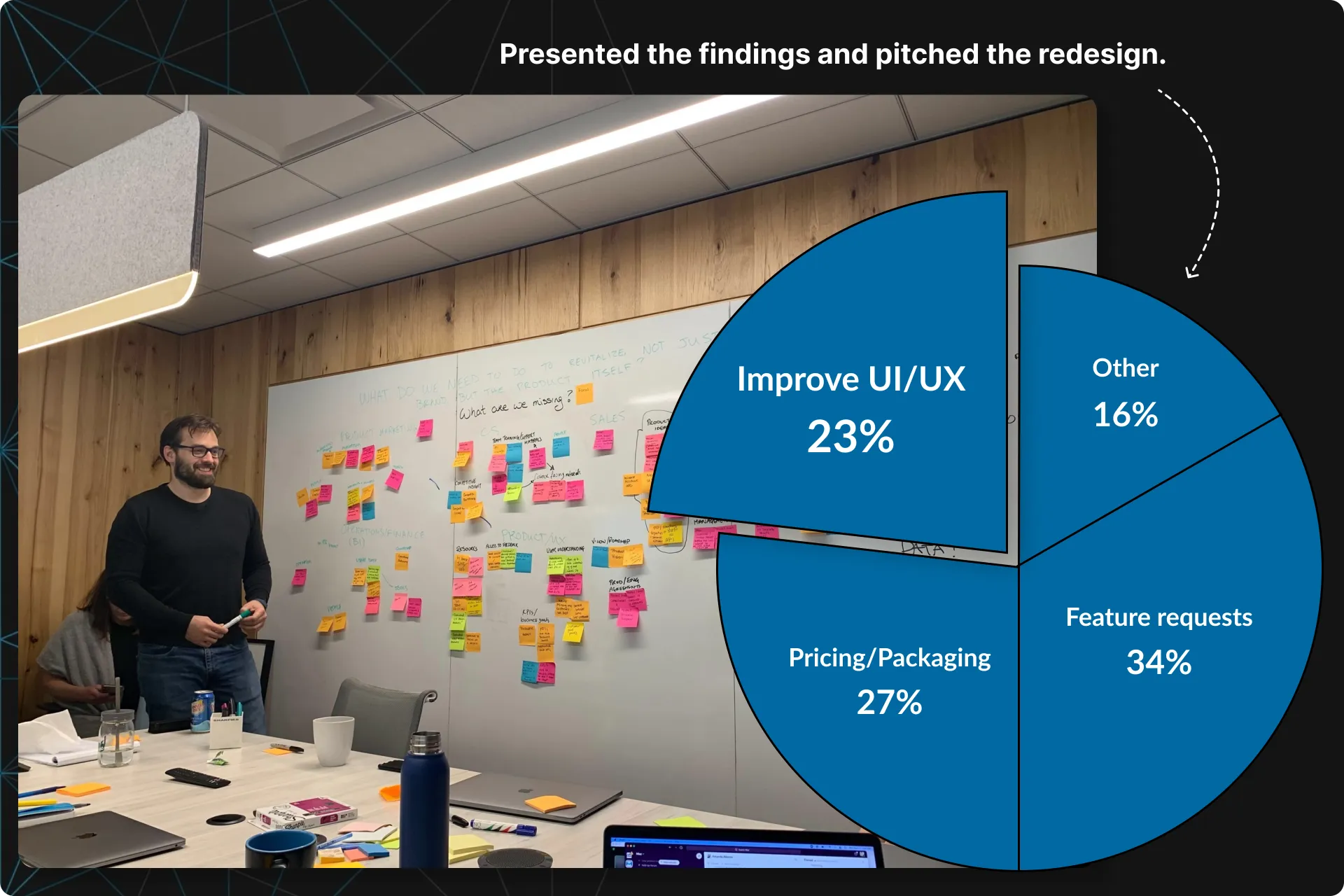
I re-ran the Product Market Fit survey, as it is a quick way to get high-quality feedback, and found that our outdated UI/UX was now one of our most urgent pain points.
Combined the PMF results with the rest of our feedback
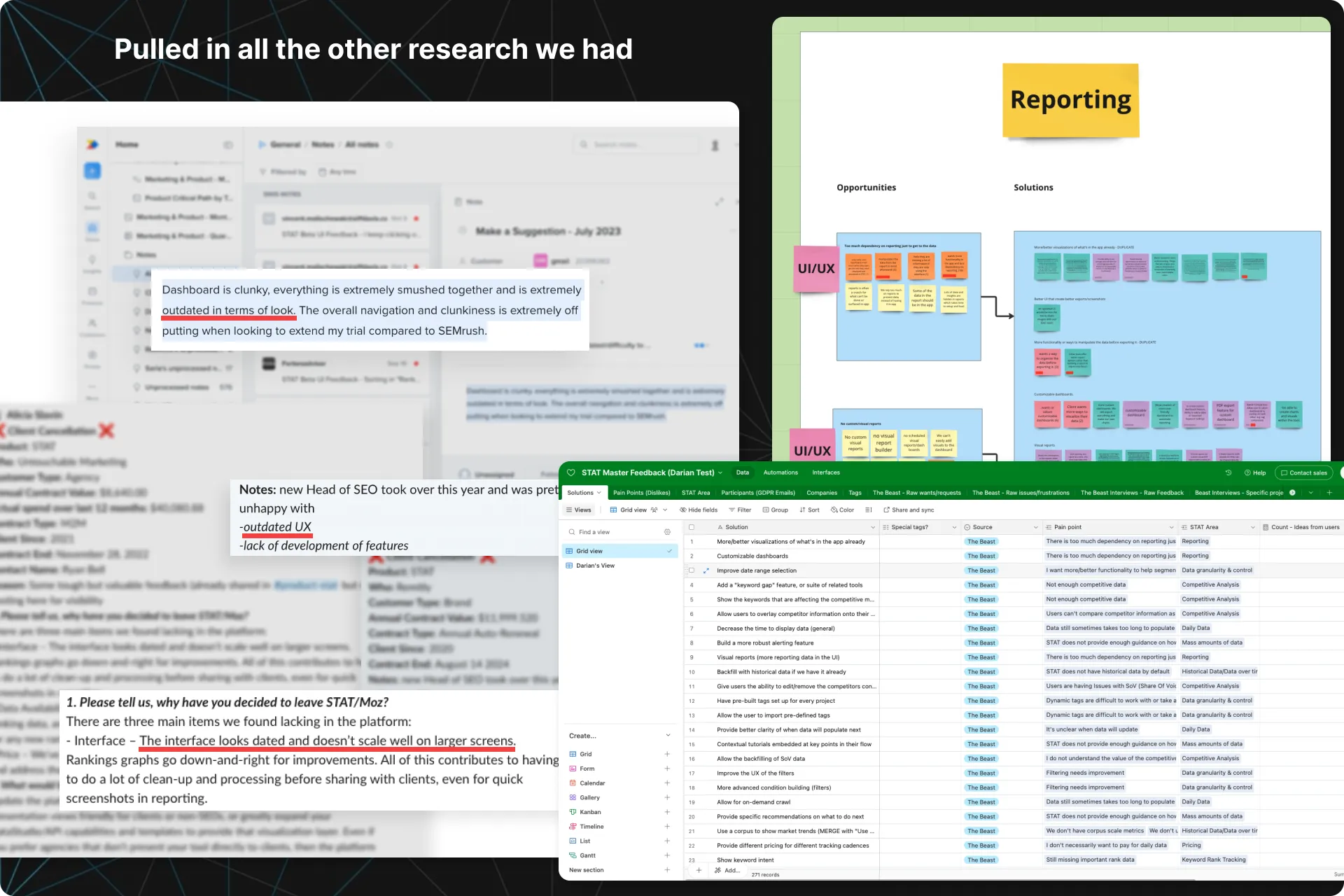
I combined the PMF results with the rest of the feedback collected from the other channels I already had in place (such as feedback from our cancelled clients, and feedback from our Sales team whenever they lost a conversion).
This proved that our outdated UI/UX was a consistently high issue across all of our feedback channels.
Presented the findings and pitched the redesign
During a 3 day onsite workshop to determine the future of our products, I highlighted the findings from my research and pitched the idea of a redesign.
This got immediate buy-in, however, we knew it would take a long time until it was completed, so we decided we would need to build and release it in key sections. This would allow us to show our clients and prospects that we were making progress on the outdated UI/UX.
We also agreed to add in any “low effort” feature requests in along the way. This would show users that we were innovating again and doing more than just updating the interface.
Updated Problems
Outdated UI/UX: Negative feedback around our UI/UX was on the rise again and now one of our most urgent pain points for our users. Conversions were also slowing down and research proved it was largely due to our outdated UI/UX as younger SEOs felt more comfortable with our competitors who offered a better experience.
A stagnant product: Cancellations were happening at a faster rate, and research proved it was largely due to the stagnancy of our product. The style was the same since day 1, and STAT had not released anything new in years.
Time: Ziff Davis wanted everything fixed quickly as they recently acquired our company and wanted STAT to stop haemorrhaging money.
Updated Goals
Rebuild STAT to reduce cancellations and increase conversions: Modernizing the interface and improving the UX should increase satisfaction, slow down cancellations, and increase conversions.
Add new features: Get feature requests in along the way to show our users that we are innovating again, and that the new version of STAT is more than just a facelift.
How to measure success: Decrease in churn, Increase in demo requests, Increase in conversions, Increase in satisfaction (PMF score), Decrease in negative feedback around our UI/UX
Updated Constraints and considerations
No changes to the backend: We were allowed to change how existing data was presented on the frontend, but changing or recalculating our data in the backend would be too time consuming.
Release new STAT in sections: This is to be planned and released in sections so we could sooner show something to our users that were thinking of leaving us due to the outdated UI/UX.
Low-effort additions only: This needed to be done as quickly as possible, so only low-effort additions were allowed. All other features had to be an exact 1:1 rebuild.
New frontend framework: For years, our outdated frontend framework hindered us from implementing even the smallest of changes to the front end. Feature requests were no longer cost-effective to implement and we could not work around this issue any longer. STAT's new frontend was to be built in React using MUI so we could iterate faster going forward.
Prioritized the sections to be released
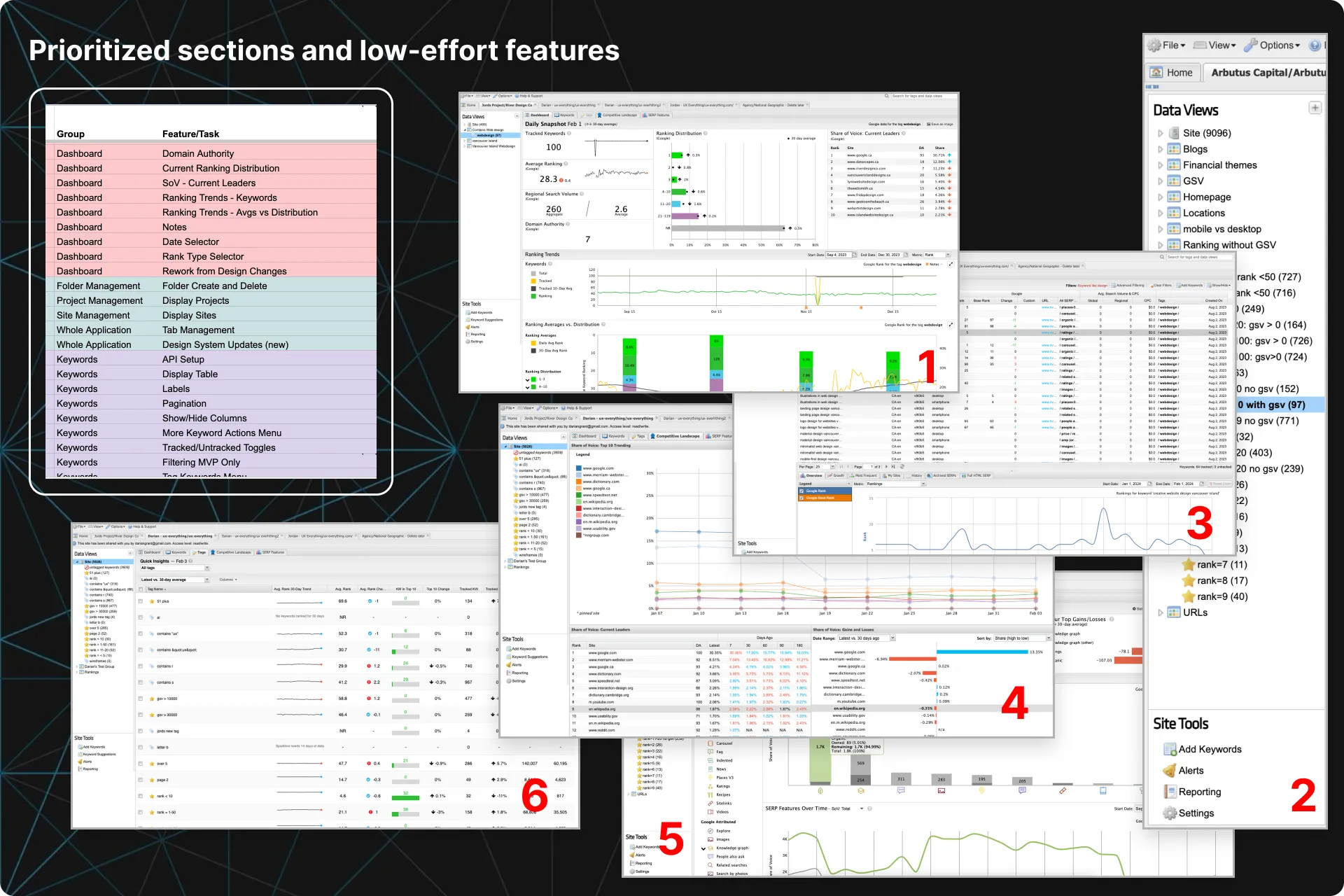
Now it was time to get to work. Our plan was to release this in sections so I prioritized their order based on usage. This would allow us to release the most impactful sections first.
Working with Dev, we also prioritized which low-effort pain points and feature requests we wanted to include in the first release of each section.
Restructured the UX team
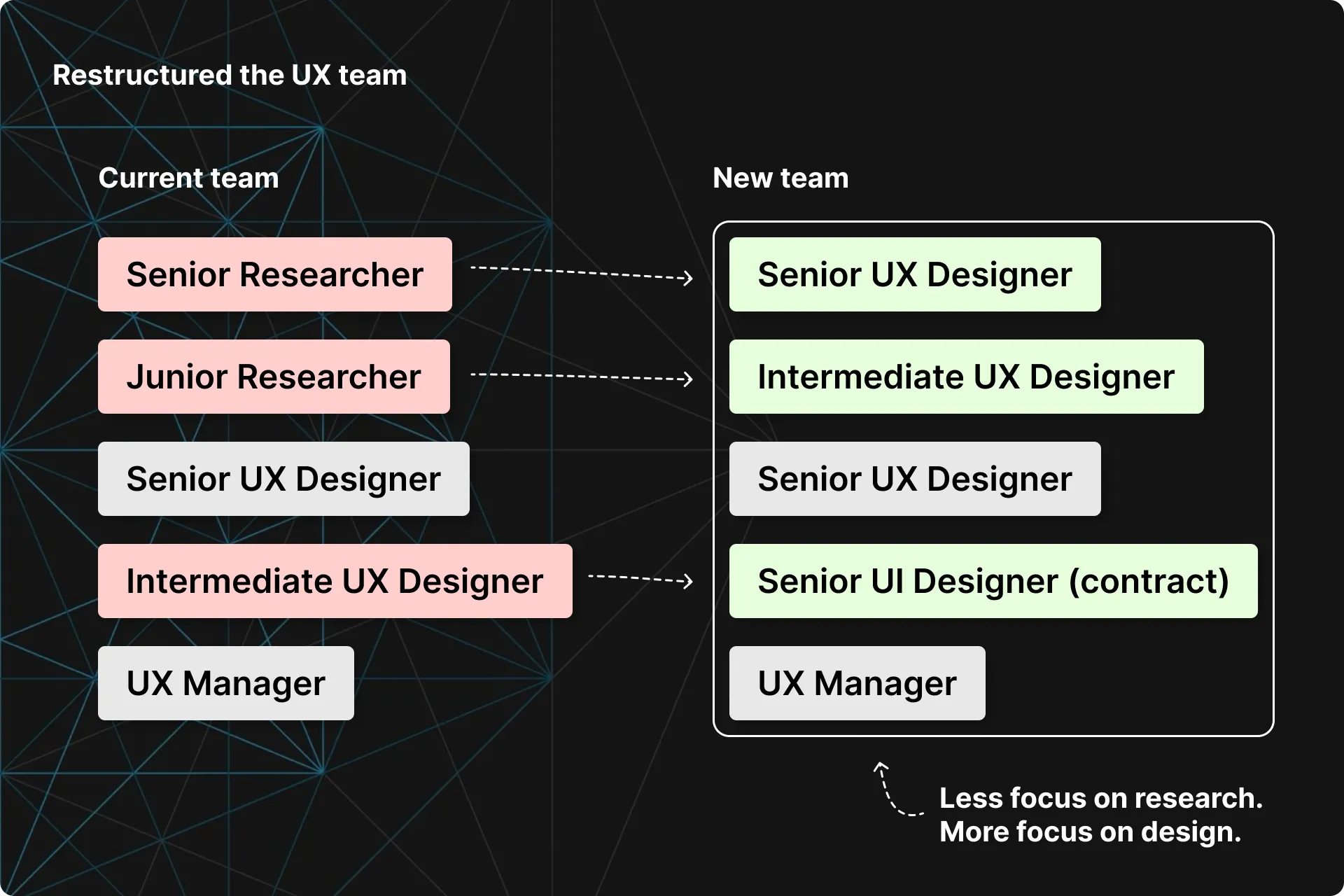
At this time, we also got buy-in for a complete redesign of Moz Pro, our other flagship product (see case study), and we currently had too many people on the team with stronger research skills than design skills. We needed to shift that to be more design-heavy if we were going to pull off both of these major projects.
One of the most difficult parts of the process; I made the decision to restructure the team to better set us up for success with these redesigns.
Created the design direction and pattern library
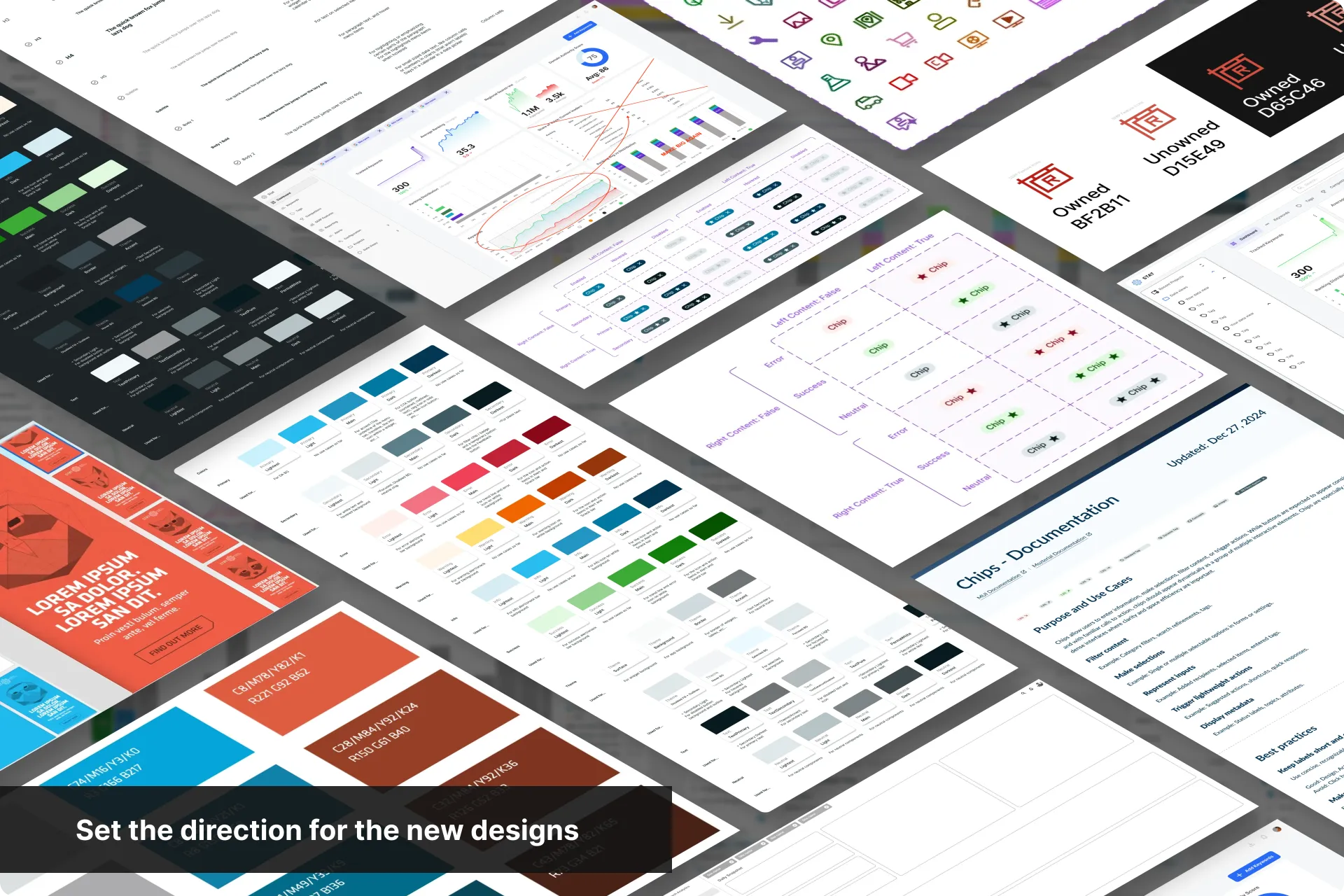
Working with our UI Design Contractor, we set the vision for the new version of STAT and created the base for our pattern library.
Ran through so many design sprints
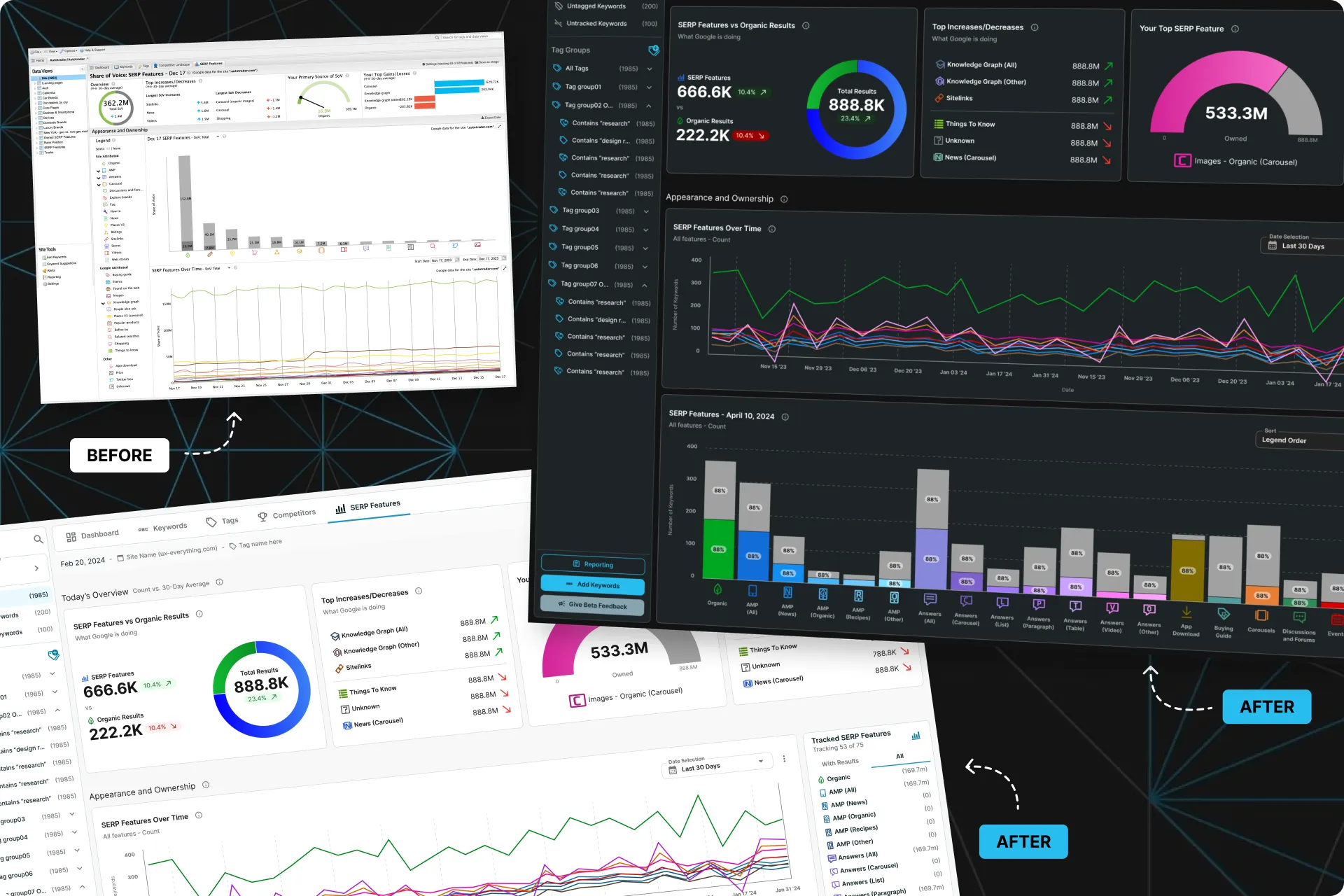
Once the design direction had been set, I partnered with our Intermediate UX Designer to apply and improve the designs for every section of the app in 2-4 week design sprints, while fleshing out our new pattern library along the way.
The actual hands-on design work was an entire process in itself which warranted its own case study, but in short, the steps we took for each section were:
- Dug up current usage data to understand what can be cut and what needs to stay
- Competitive Analyses
- Fleshed out requirements for the MVP
- Wireframes and explorations
- Usability Tests
- High-Fidelity mockups and more Usability Tests
- Pattern Library updates and Dev handoff
- Pendo hooks to measure usage and success
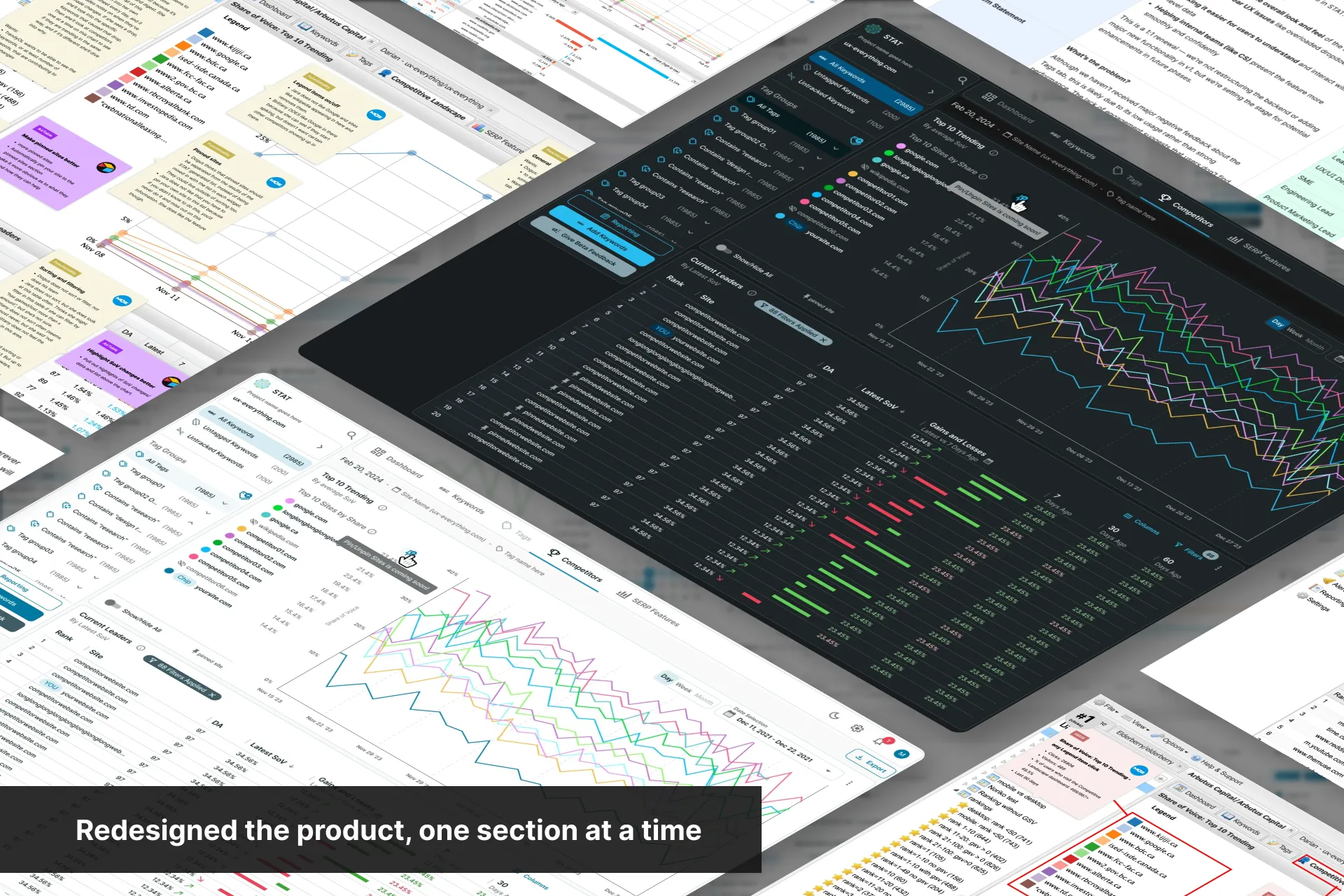
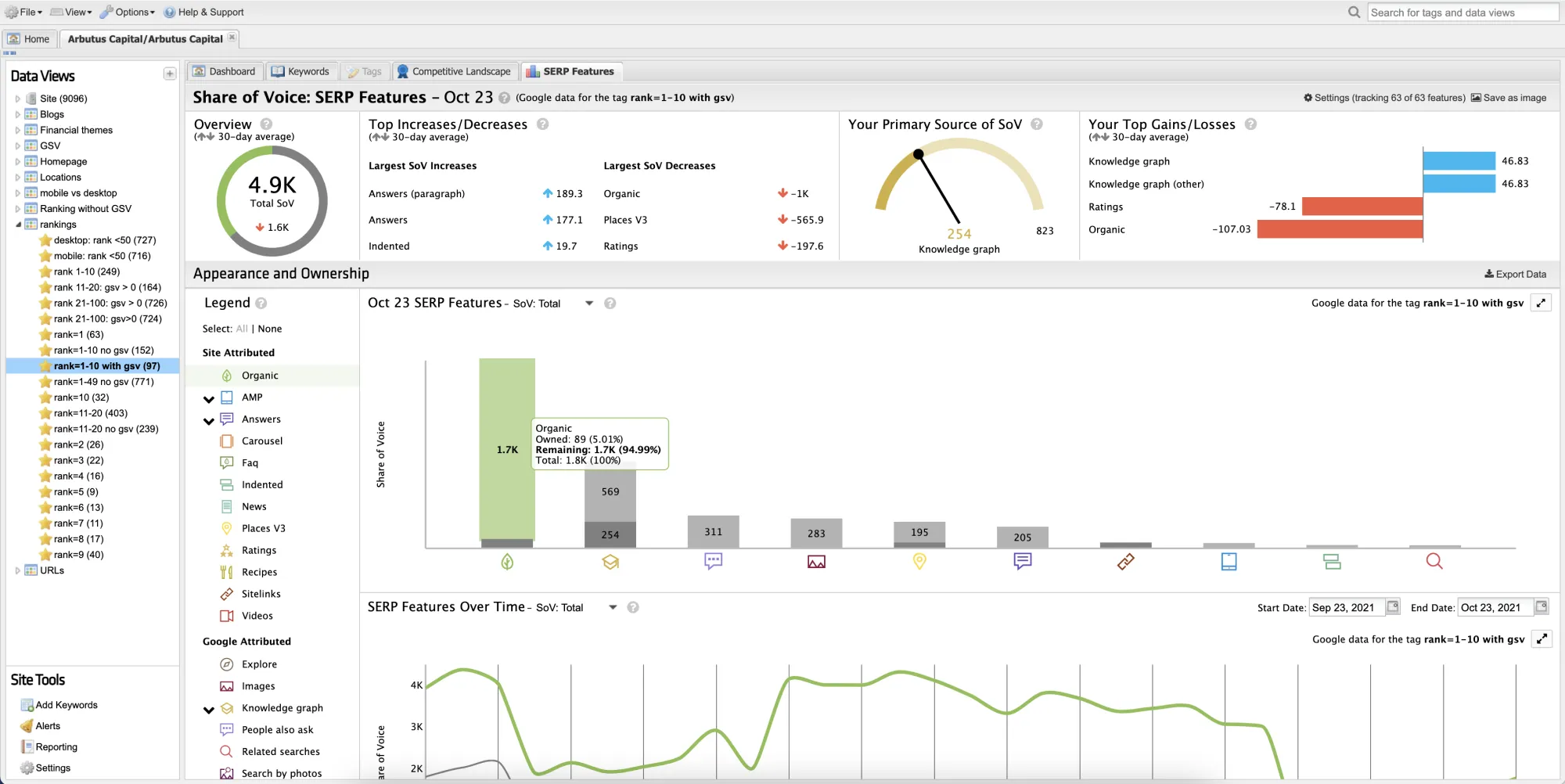
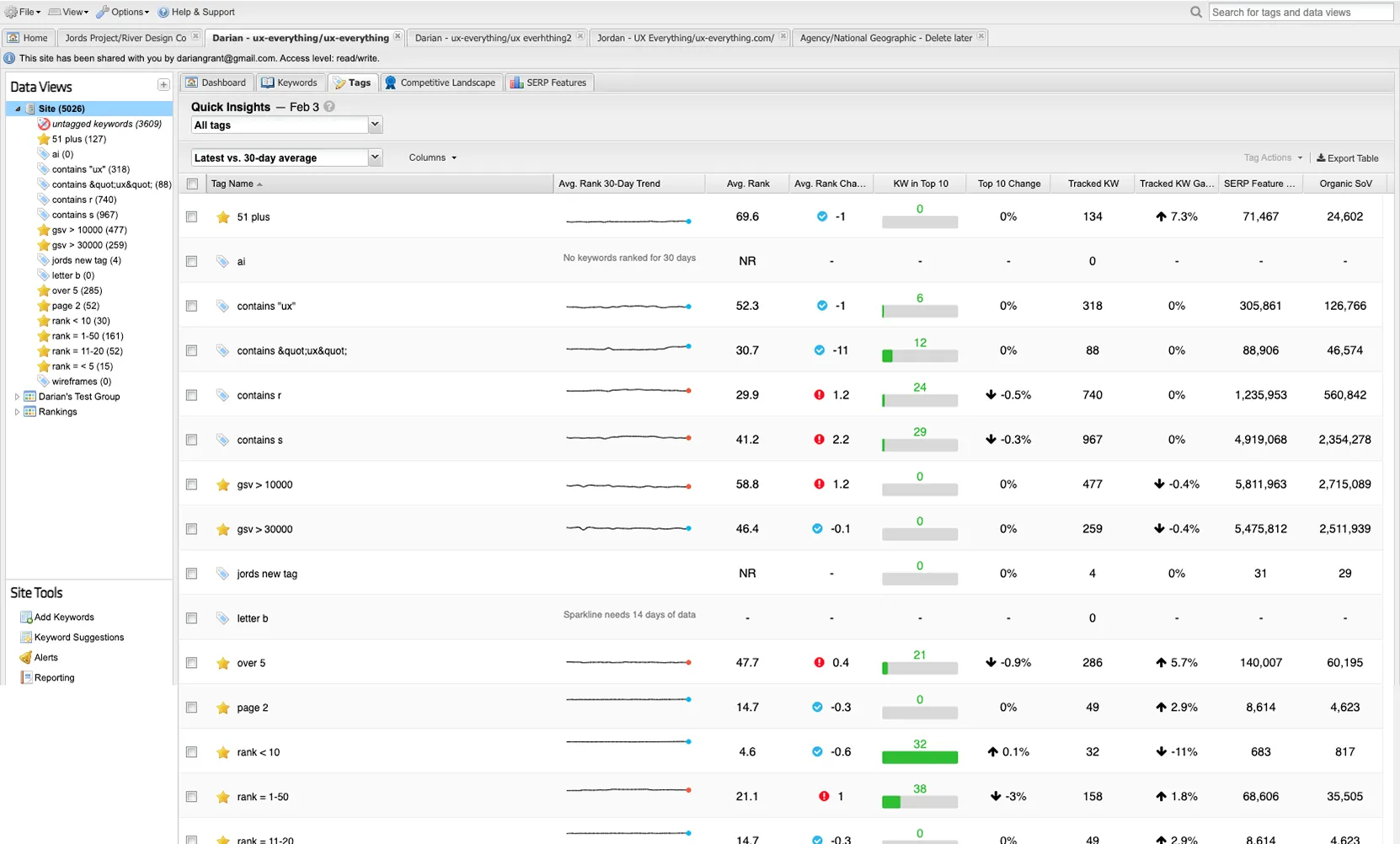
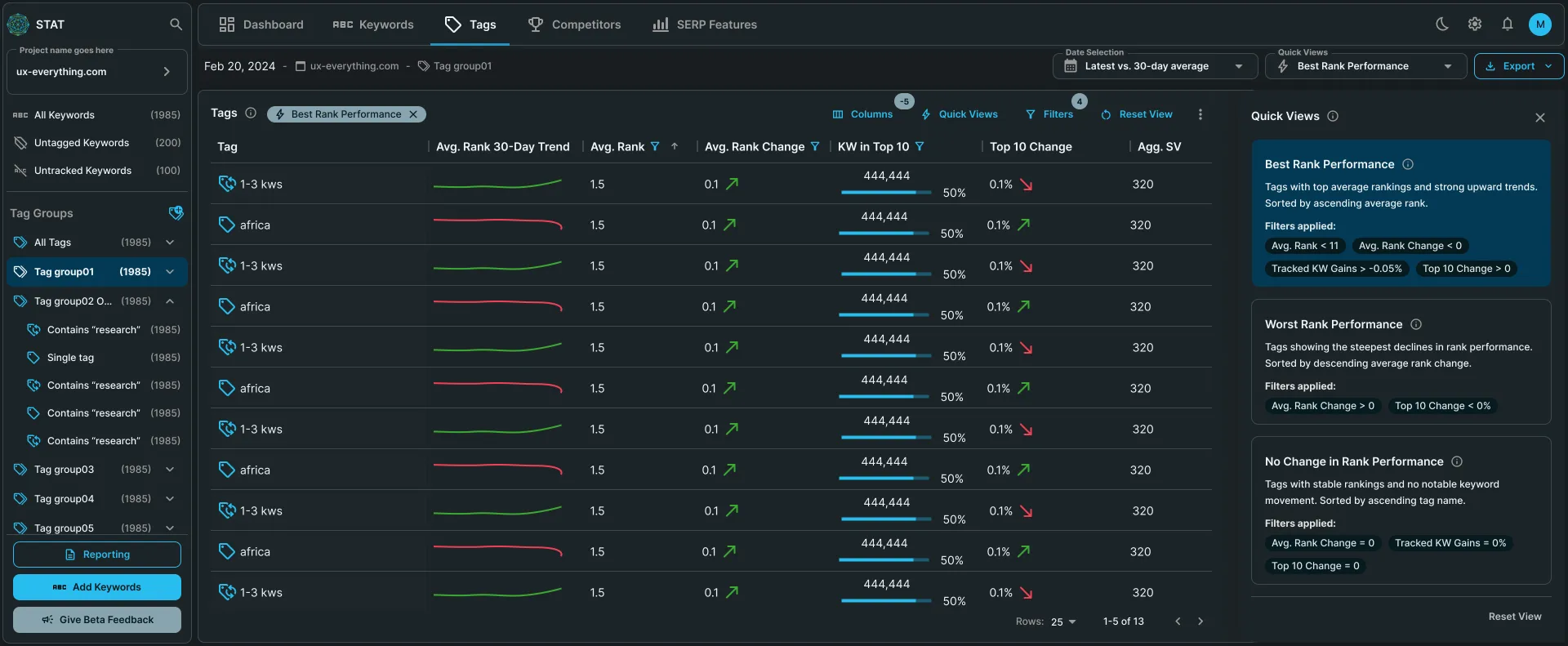
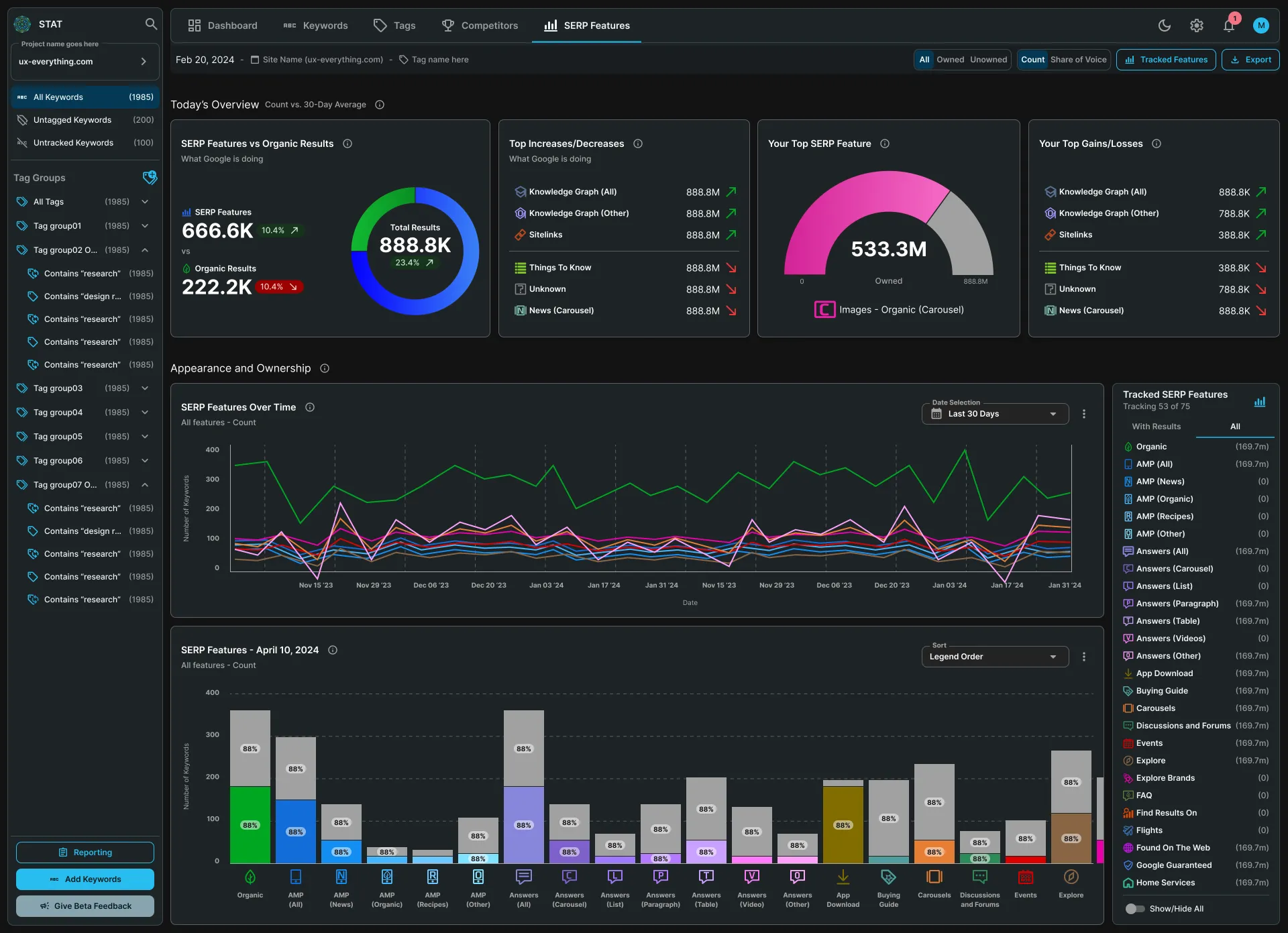
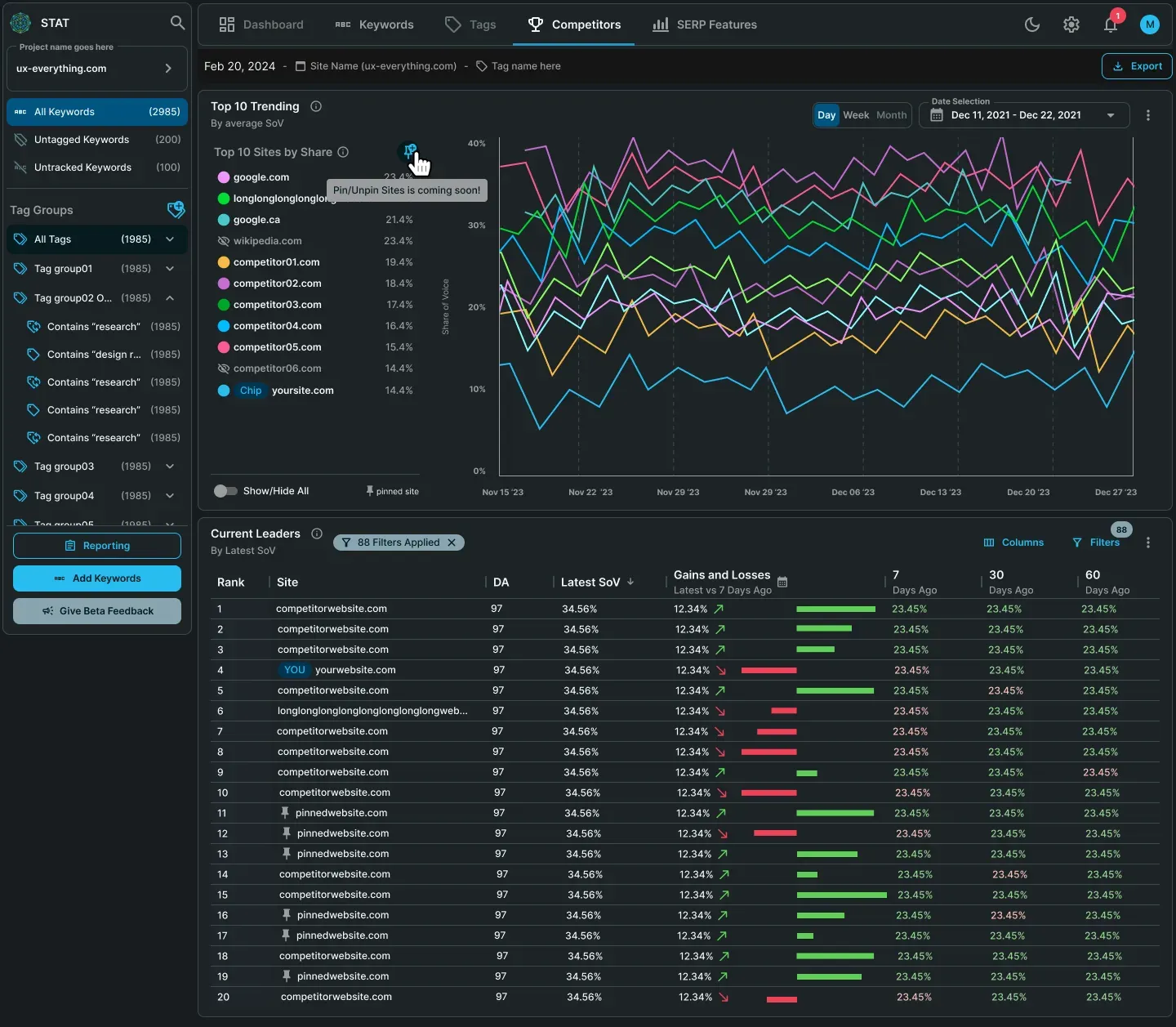
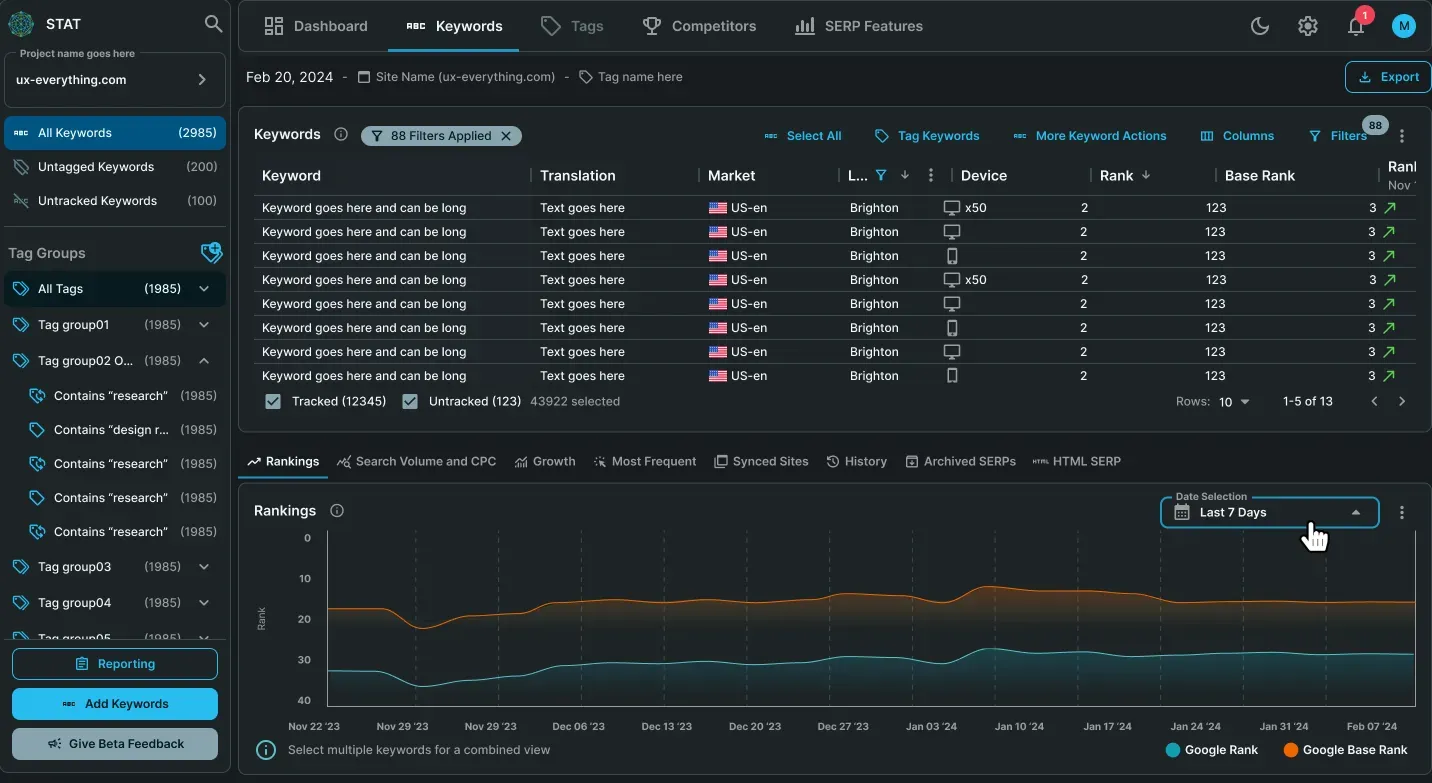
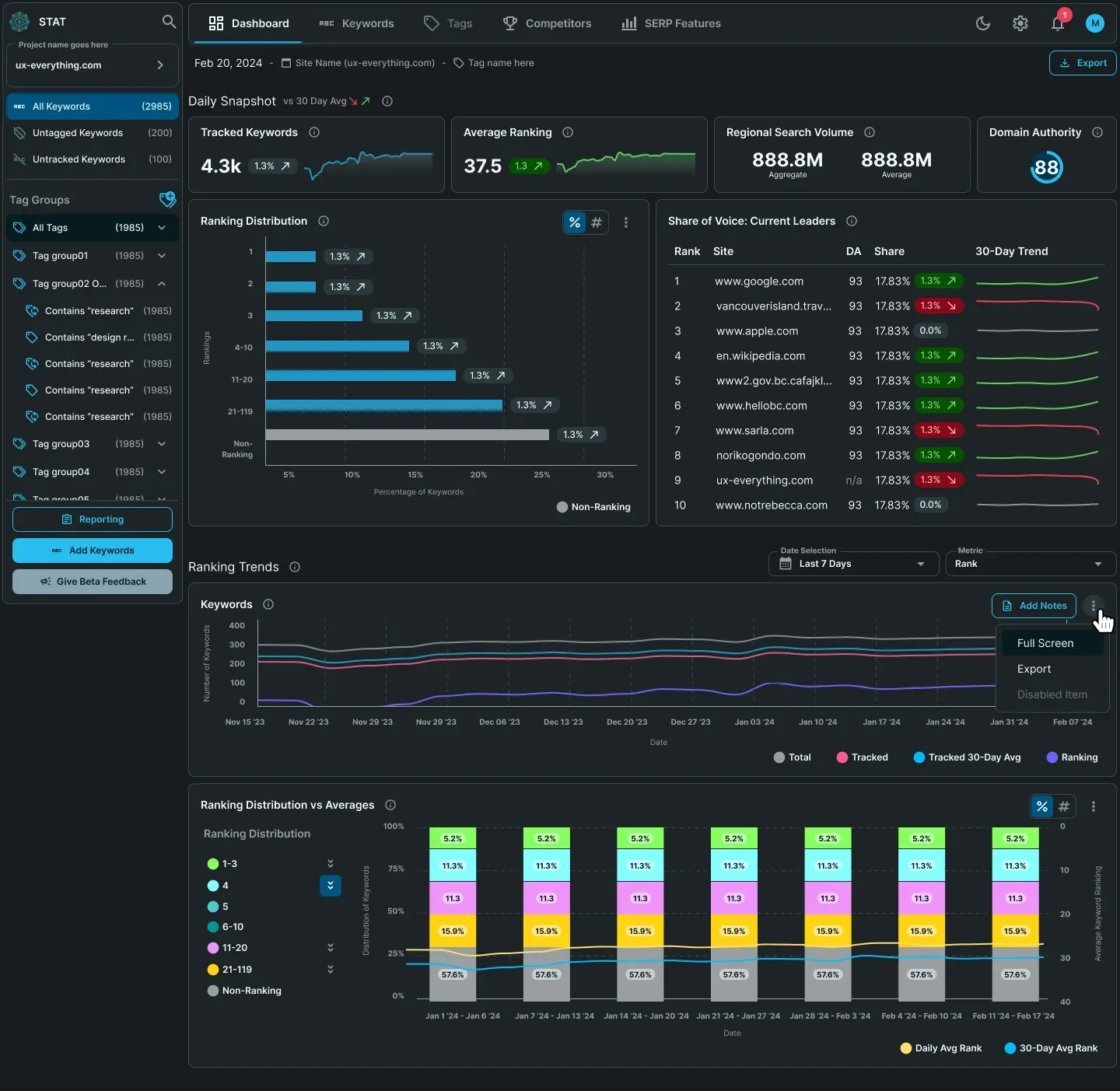
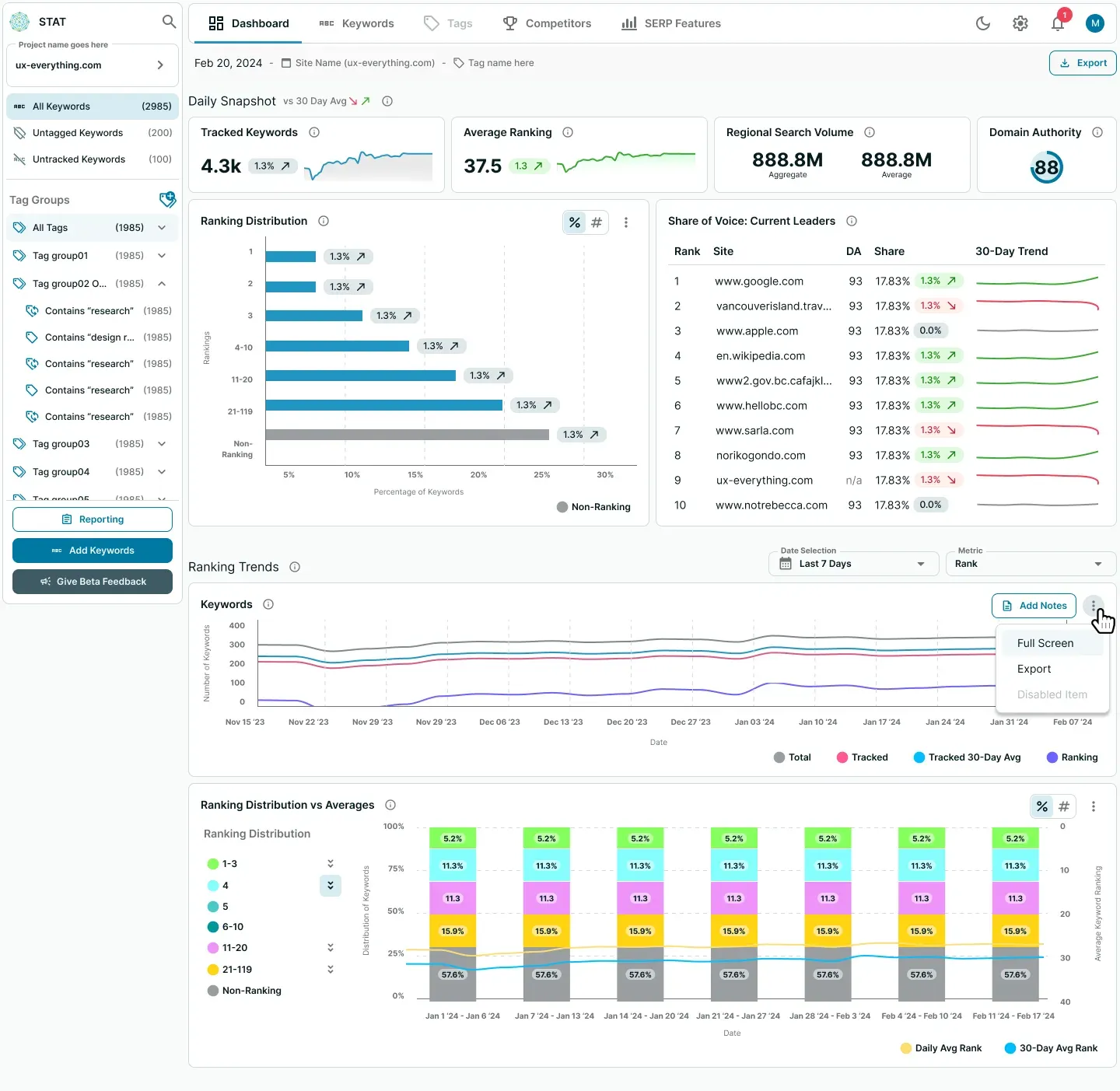
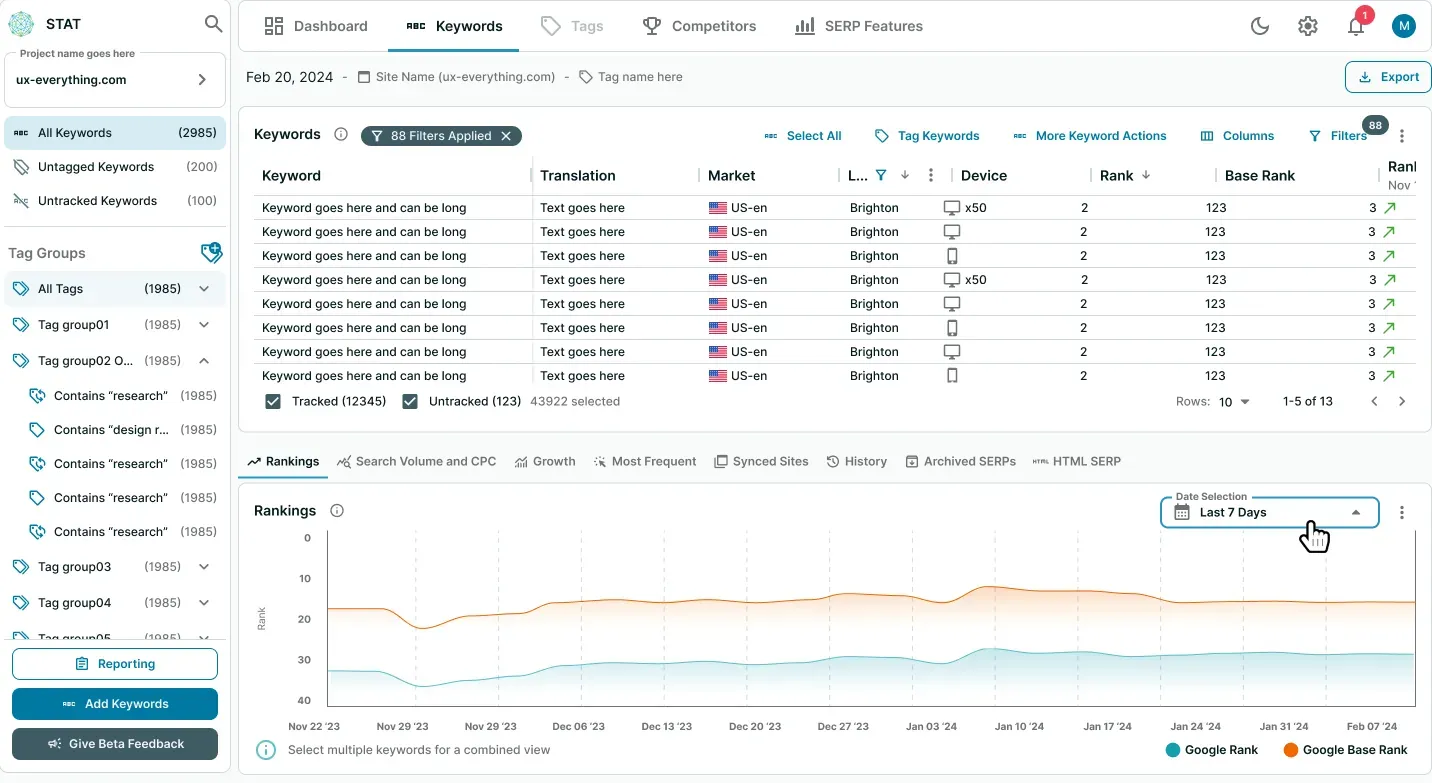
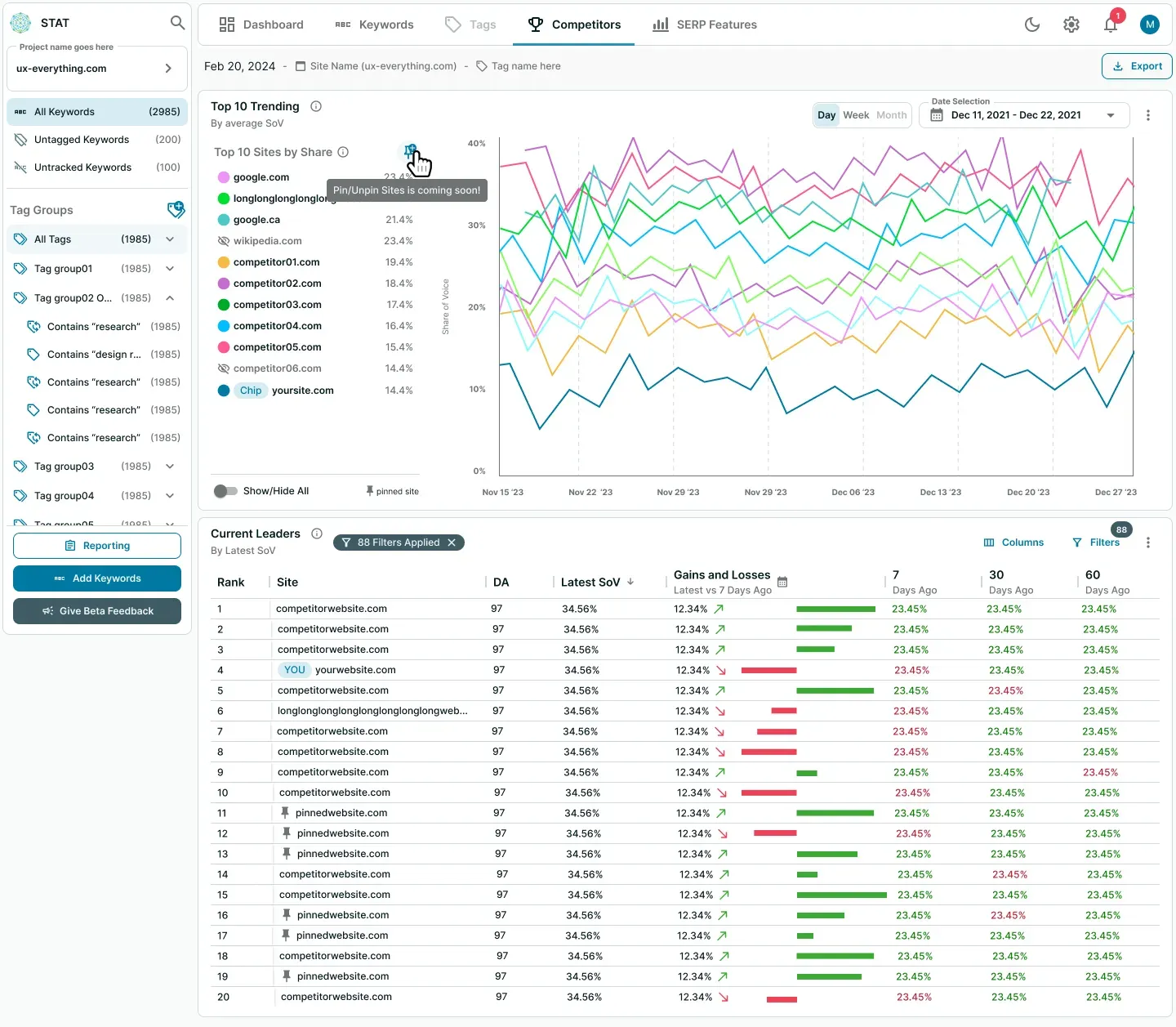
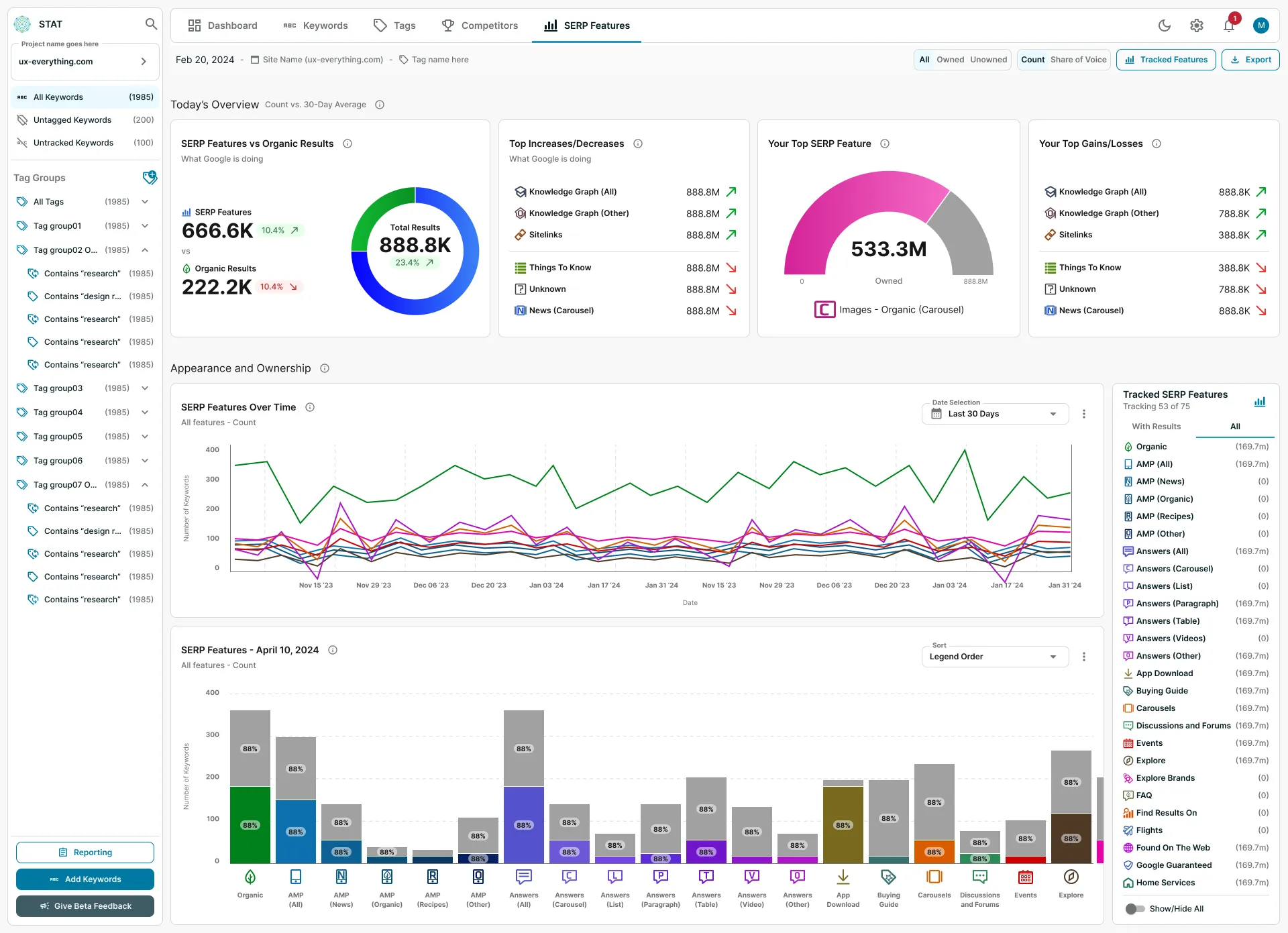
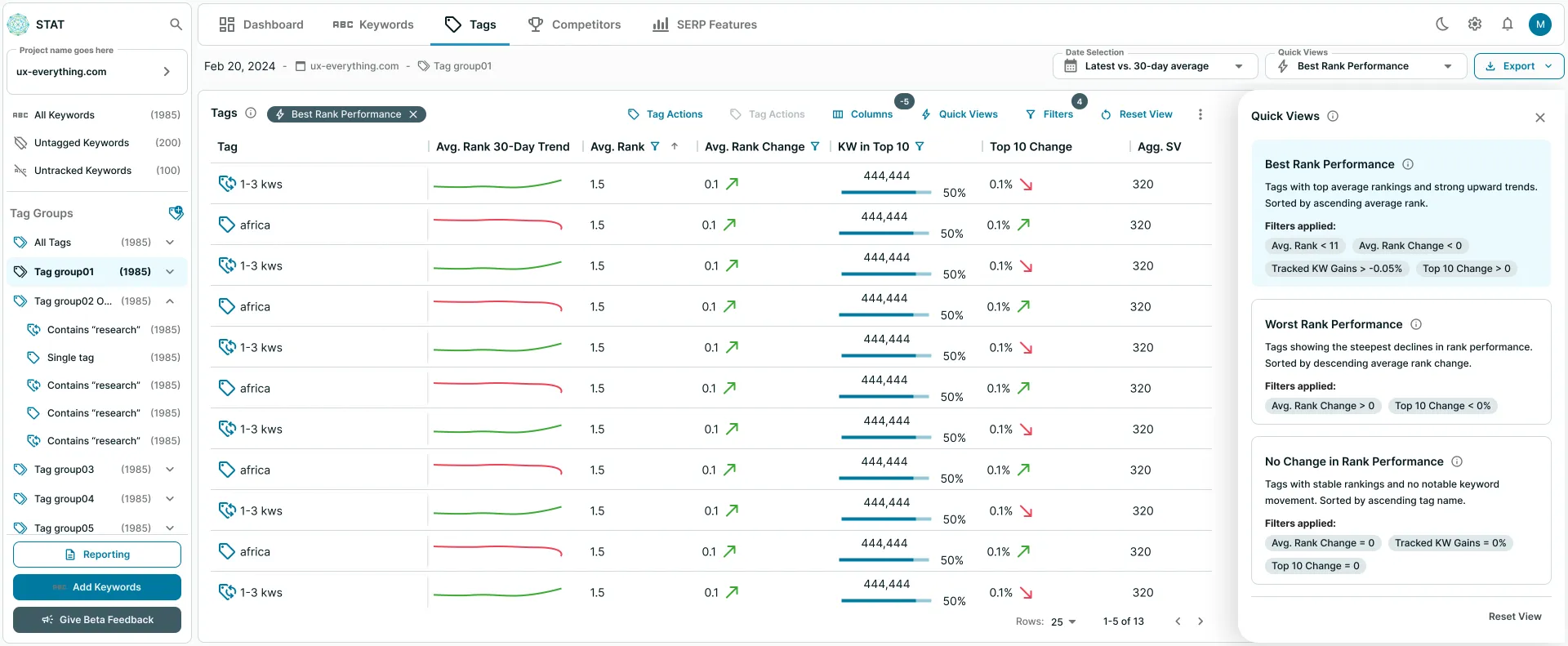
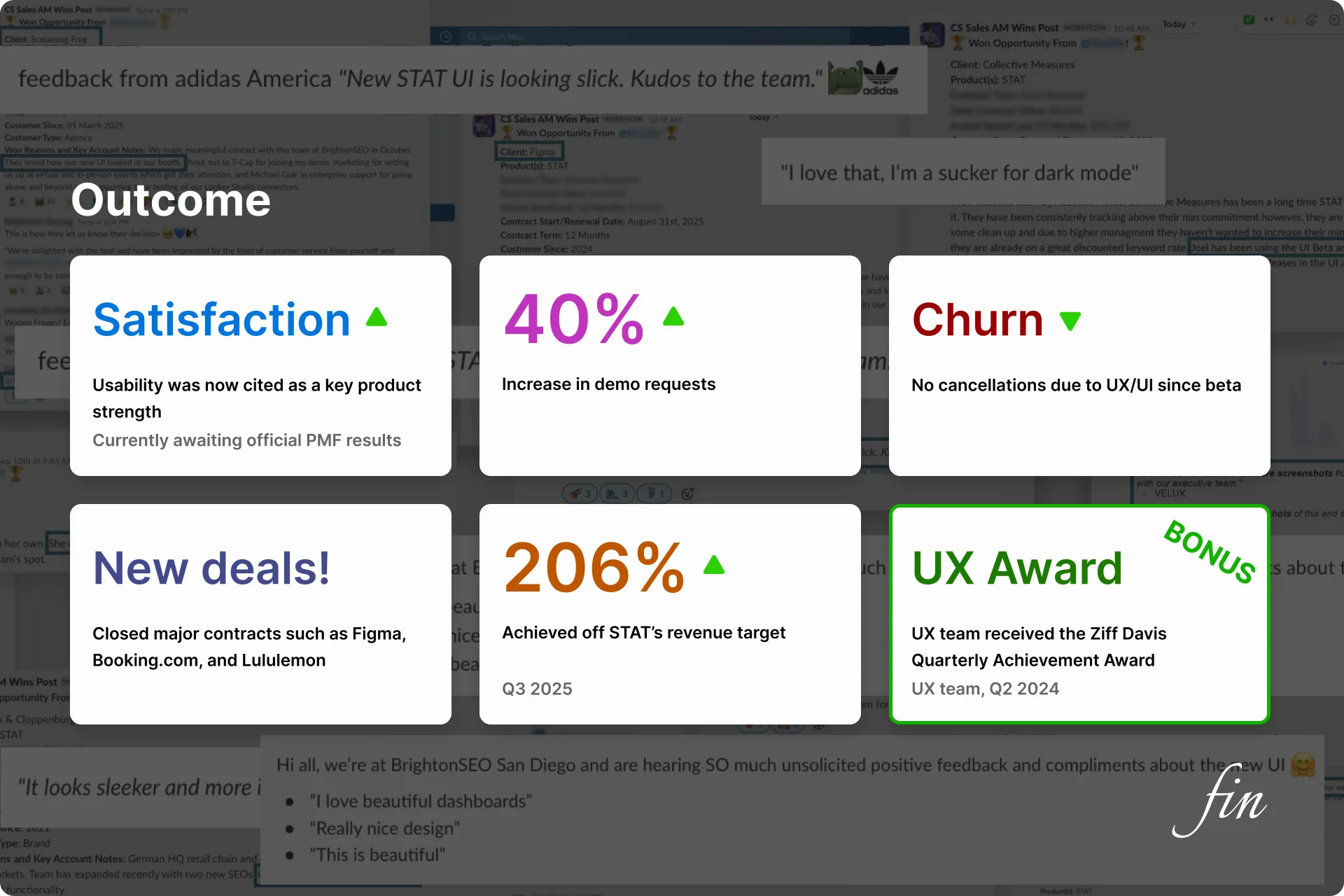
Less cancellations, more demos and satisfaction!
Since STAT 2.0 was released as a separate product, engagement was extremely low until everyone was forced to move over to the new version. Once that happened:
- Client satisfaction soared — usability was now cited as a key product strength
- +40% increase in demo requests
- Churn dropped significantly — there were no cancellations due to UX/UI since beta
- We closed major contracts such as Figma, Booking.com, and Lululemon
- STAT achieved 206% of our revenue target in Q3 2025 — driven by the UX overhaul
Bonus UX Outcomes:
- A new product that adhered to modern design and functionality standards
- A product finally built on a scalable pattern library
- The UX team received the Quarterly Achievement Award (UX team, Q2 2024)
 How I focused on more meaningful work
Hired to redesign the flagship product, I then convinced the company NOT to redesign it for 7 years, and instead, focus on more impactful releases to our clients.
Next Case Study
How I focused on more meaningful work
Hired to redesign the flagship product, I then convinced the company NOT to redesign it for 7 years, and instead, focus on more impactful releases to our clients.
Next Case Study
 Diving into our repeatable design process
How we modernized STAT incrementally through a repeatable design sprint process that kept UX ahead of Dev without sacrificing research, validation, or confidence in our decisions.
Diving into our repeatable design process
How we modernized STAT incrementally through a repeatable design sprint process that kept UX ahead of Dev without sacrificing research, validation, or confidence in our decisions.


 Email me