ABOUT Me

Darian Grant

Design leader. 16+ years. Still asking "but why?" at every meeting.

I've shipped designs across SaaS, console games, and mobile apps which mostly means I've spent a decade and a half convincing people that good design isn't decoration.

I specialize in complex, data-heavy products where the wrong decision costs real money. I love building the teams and systems that make good decisions repeatable.

I've spent most of my career in rooms where design had to earn its seat at the table, so I'm comfortable with that.

Currently based in Vancouver, and open to the right opportunity with the right team... or any place that has dogs.
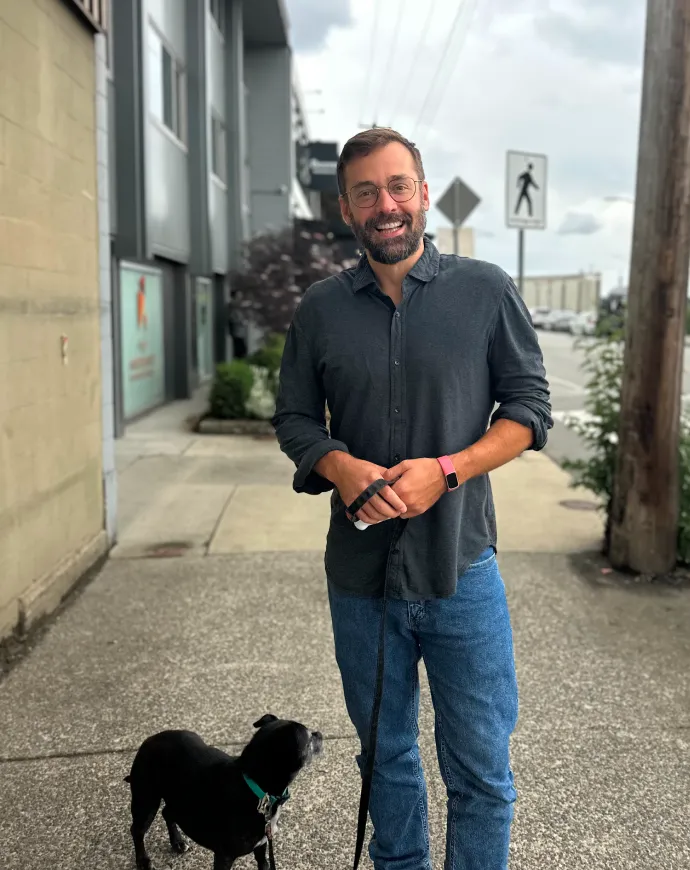
MOre me

Over 16 years of experience accelerating UX departments and maturity while delivering data-driven products to your business and users.

Nobex Designs

Freelance

Electronic Arts

UX Designer II
UX Designer

A Thinking Ape

Senior UX Designer
Alida

Lead UX Designer

STAT Search Analytics

UX Manager

ePACT Network

UX Director

Moz

Senior UX Manager
Principal UX Strategist

Nobex Designs

Freelance

Electronic Arts

UX Designer II
UX Designer

A Thinking Ape

Senior UX Designer

Alida

Lead UX Designer

STAT Search Analytics

UX Manager

ePACT Network

UX Director

Moz

Senior UX Manager
Principal UX Strategist

my beliefs

Design Philosophies

Here are a few of my beliefs about how Design should function. If this resonates with you, it might be a good fit :)

01

Business first, not users

Most designers say "users first" but I believe our job is to figure out how to grow the business from the design side, and THAT means solving problems for the user and improving their experience.

02

Justify everything

Every decision needs a reason, from a button's corner radius all the way back to the business goal. If I or my team can't justify something, then we don't know it well enough.

03

Function before beauty

I care more about what design does than how it looks. I still take real pride in the craft, but it needs to solve a problem first.

04

Good enough is enough

"Good enough" isn't a cop-out. It's a shifting bar that should always be justified by ROI.

05

Design discipline

Every decision should be documented and traceable. If you can't point to the answer quickly, that's a problem that can erode trust quickly.

06

Measure everything

If you're not measuring design outcomes, you don't actually know if your work is working.

07

Stay informed

Design needs a seat at the table early with access to data, users, and real business context.

How I work

AI in my process

I use AI differently at every stage. It all depends on the risk and the work involved.
Take a look and ask me about the tools and prompts I use for each stage.

AI leads
Collaborative
I lead, AI checks

Strategy

I lead, AI checks

AI as my second opinion

I write the first draft myself, then bring in AI to pressure-test it and find the gaps.

Research planning

I lead, AI checks

AI as my sharp editor

Vetting questions, emails, and consent forms for leading language and goal alignment.

Research analysis

Collaborative

AI as a tiered system

Themes, then nuance, then quotes — always with timestamps and dissenting opinions surfaced.

Communicating insights

Collaborative

AI as my translator

One finding, many formats — exec summaries, user stories, acceptance criteria, bug lists.

Wireframing

AI leads

AI as a junior designer

Fast ideation and starting points — output that's mine to shape, not ship.

Prototyping

AI leads

AI as a fast-forward

Working prototypes earlier, so feedback is based on something real, not a flat mockup.

Design systems

Collaborative

Still early days

Bridging Figma into Storybook with AI using CoPilot. A complicated process but exciting when it works. Looking into alternatives.